
Expansion of Indirect Share Transfer Taxation in Nigeria
The Nigerian tax landscape has expanded to include stricter enforcement on offshore disposals of Nigerian assets.


The Nigerian tax landscape has expanded to include stricter enforcement on offshore disposals of Nigerian assets.

The Nigerian broadcasting industry is currently navigating the “Cloud Broadcasting Summit Africa 2026” milestone, which focuses on the transition from hardware-heavy production to cloud-based content creation and archival.

Environmental sustainability has increasingly become a pivotal influence on intellectual property (IP) policy across the globe. This shift is largely driven by initiatives like the WIPO GREEN platform, which facilitates connections between providers of green technologies and those seeking sustainable solutions. In Nigeria, this global movement has been embodied through the IP for Green Innovation Program.

Global regulatory bodies are increasingly focusing on the “agentic AI” era, where autonomous systems
handle credit decisioning, fraud detection, and transaction reconciliation without real-time human intervention.

Nigeria’s investment in satellite technology, anchored by the Nigerian Communications Satellite Limited (NIGCOMSAT), sits at the intersection of law, policy, and rapid technological innovation. As a state-owned enterprise mandated to provide satellite communication services, NIGCOMSAT operates within a sophisticated legal and regulatory ecosystem designed to ensure compliance with global norms while positioning Nigeria strategically within the emerging global space economy. For industry stakeholders, legal practitioners, and technology enthusiasts, understanding this framework is essential, as it dictates how satellite services are delivered, how international partnerships are structured, and how the broader technology landscape is governed.

The regulatory landscape for digital assets has evolved beyond its initial uncertainty with the
implementation of the Securities and Exchange Commission (SEC) Digital Assets Rules.
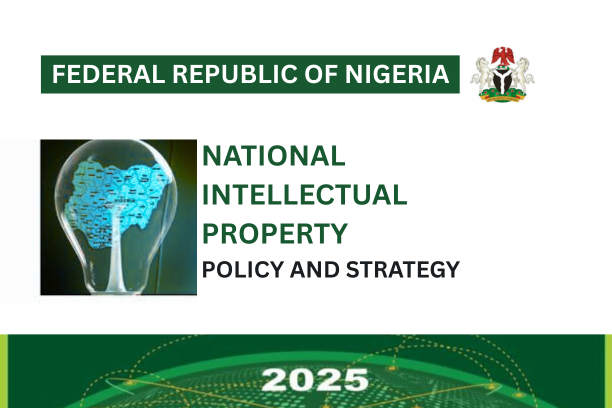
In a groundbreaking decision for Nigeria’s innovation landscape, the Federal Executive Council (FEC) approved
the National Intellectual Property Policy and Strategy (NIPPS) in November 2025. This policy signifies a major
transformation aimed at modernizing Nigeria’s intellectual property framework. It seeks to incorporate intellectual
property into the larger digital transformation agenda and align with the Startup Act of 2022.
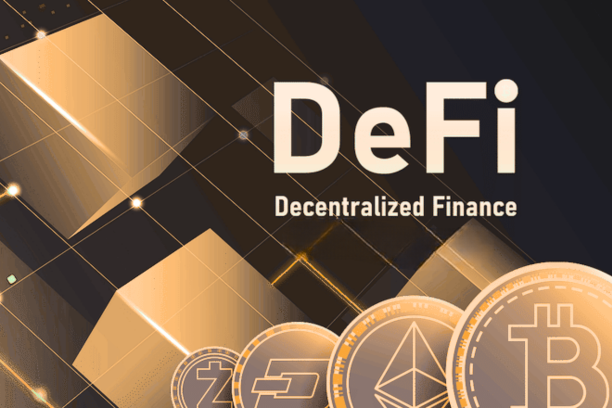
The maturation of Decentralized Finance (DeFi) is moving beyond speculative crypto-assets toward the tokenization of real-world assets (RWA) and institutional-grade infrastructure.

The Nigerian telecommunications industry is undergoing a substantial transformation
as satellite-based internet services shift from being niche enterprise solutions to becoming
mainstream consumer options. The Nigerian Communications Commission (NCC) plays a
pivotal role in this evolution by actively licensing Non-Geostationary Orbit (NGSO) providers,
which is steering the market towards the implementation of “Direct-to-Cell” (D2C) technology.

A Significant Milestone in May 2024: The Adoption of the WIPO Treaty on Intellectual Property, Genetic Resources, and Associated Traditional Knowledge (GRATK).