Introduction Companies with foreign ownership are entities incorporated in Nigeria but owned wholly or partly by non-Nigerian individuals or corporate bodies. Nigeria permits foreign participation across most sectors of its economy, and foreign investors may acquire up to 100% ownership of a Nigerian company, subject to compliance with statutory requirements and sector-specific restrictions. The Companies…
Nigeria’s investment in satellite technology, anchored by the Nigerian Communications Satellite Limited (NIGCOMSAT), sits at the intersection of law, policy, and rapid technological innovation. As a state-owned enterprise mandated to provide satellite communication services, NIGCOMSAT operates within a sophisticated legal and regulatory ecosystem designed to ensure compliance with global norms while positioning Nigeria strategically within the emerging global space economy. For industry stakeholders, legal practitioners, and technology enthusiasts, understanding this framework is essential, as it dictates how satellite services are delivered, how international partnerships are structured, and how the broader technology landscape is governed.
2025 was a very exciting year and saw significant changes in Nigeria’s legal and regulatory landscape. Series of laws were enacted by the National Assembly and regulatory guidelines were also issued by regulators including the Central Bank of Nigeria, Federal Competition and Consumer Protection Commission, the Nigerian Communications Commission, etc. There were also some important judicial decisions from the courts in Nigeria which shaped the legal and regulatory space in the country. This recap is divided into four parts representing the four quarters of the year, highlighting what we think are the most impactful laws and regulations, reforms, and judicial decisions in 2025.
The emergence and continued growth of Financial Technology (FinTech) companies in the Nigerian financial services sector has redefined how financial services are delivered, with technology driven solutions that enable faster payments, lending and wealth management. These innovations often lead to complex collaborations between FinTech startups, traditional banks and third-party service providers. These partnerships may inevitably expose the parties to legal and regulatory risks if not properly managed.
On 6 October 2025, The Central Bank of Nigeria (CBN) issued the Guidelines for the Operations of Agent Banking in Nigeria (the “Guidelines”). The purpose of the Guidelines is the provision of the minimum standards for the regulations and operations of agent banking in Nigeria. They provide for the responsibilities and obligations of the parties…
With the enactment of the Investment and Securities Act (ISA) 2025, virtual assets/digital assets including cryptocurrencies, Non-Fungible Tokens (NFTs), etc. can now be legally traded and transacted in Nigeria subject to satisfying applicable legal requirements. Prior to the enactment of the ISA, the legality of trading or transacting in virtual/digital assets was uncertain especially following the Central Bank of Nigeria (CBN) circular of 2021 which directed all financial institutions to identify persons and entities transacting or operating cryptocurrency exchanges in Nigeria and ensure that their bank accounts are closed.
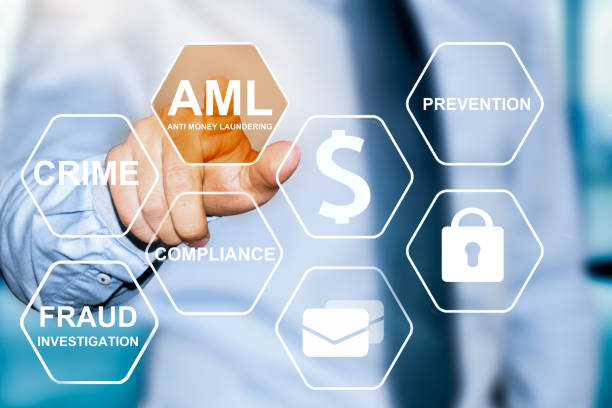
Money laundering and terrorist financing are major threats to national and global security, and Nigeria is no exception. Under Section 18(2) of the Money Laundering (Prevention and Prohibition) Act, 2022 (MLPPA), money laundering is defined as the act of concealing, disguising, converting, transferring, or controlling funds or property, knowing they are proceeds of an unlawful act. Terrorist financing on the other hand, refers to the provision of funds or financial support to individuals or groups to enable them commit acts of terrorism.
Introduction On 26th June 2025, the President of the Federal Republic of Nigeria signed four landmark tax reform bills into law, marking a significant shift in the nation’s tax landscape. The laws are the Nigeria Tax Act (Ease of Doing Business), the Nigeria Tax Administration Act, the Nigeria Revenue Service (Establishment) Act, and the Joint…
In the last few years, the Nigerian Financial Technology (FinTech) space has witnessed exponential growth and has attracted both local and international investors. Nigeria is home to some unicorns especially in the payments segments of the financial services sector. Like in most jurisdictions, the regulators appear to be playing ‘catch up’ with FinTechs and it has been said that there appears to be an over regulation of FinTechs in Nigeria.
Revocation of trademarks refers to the legal process of cancelling or removing a registered trademark from the official Trademark Register by the Registrar of Trademarks or the court. In essence, the registered trademark ceases to enjoy protection under the law and the trademark owner loses the exclusive right to use that mark commercially. In Nigeria,…